Industry-Focused AI in digital marketing courses can prepare you for careers in AI-powered SEO, performance marketing or PPC, social media strategy, content marketing, marketing automation, digital analytics, and e-commerce or growth marketing. These roles combine marketing strategy with AI tools, data analysis, campaign optimization, and customer-journey management.
AI in digital marketing courses help train the next generation of marketers in creative, data-driven, automated and customer-centric marketing. Instead of reducing the need for marketers, artificial intelligence has transformed their requirements into skills for using artificial intelligence in order to conduct audience research, create marketing content, launch and manage campaigns, personalize marketing processes and analyse the marketing metrics.
Boston Institute of Analytics provides a course called Digital Marketing & Artificial Intelligence which is meant to unite basic concepts of digital marketing and marketing processes enabled by AI. The course comes in both offline and online versions and lasts between 4 to 10 months according to the qualification acquired.
7 Career Opportunities After AI in Digital Marketing Courses
The seven most real-world career opportunities after an AI in digital marketing course are AI-powered SEO specialist, performance marketing or PPC specialist, social media planner, content marketing specialist, marketing automation specialist, digital marketing analyst, and e-commerce or growth marketing specialist.
| Career opportunity | What you do | AI skills you use | Best for |
|---|---|---|---|
| AI-Powered SEO Specialist | Improve organic visibility, keyword strategy, technical SEO, and content performance | AI keyword research, content briefs, search-intent analysis, AI-overview/GEO readiness | Analytical and research-oriented learners |
| Performance Marketing / PPC Specialist | Run paid campaigns across Google, Meta, LinkedIn, and other platforms | Audience targeting, creative testing, budget optimization, conversion tracking | Data-driven marketers |
| Social Media Strategist | Build social presence, plan content, manage communities, and measure engagement | AI content ideation, caption creation, trend analysis, social listening | Creative communicators |
| Content Marketing Specialist | Create blogs, landing pages, videos, email content, and brand assets | Generative AI, prompt engineering, content repurposing, editorial quality control | Writers and storytellers |
| Marketing Automation Specialist | Build automated customer journeys across email, CRM, ads, and website touchpoints | Workflow automation, segmentation, lead nurturing, personalization | Process-focused marketers |
| Digital Marketing Analyst | Measure campaign performance and turn data into recommendations | GA4, dashboards, attribution, A/B testing, predictive analytics | Numbers-oriented learners |
| E-commerce / Growth Marketing Specialist | Improve acquisition, conversion, retention, and revenue for online businesses | CRO, product recommendations, funnel analysis, customer-journey optimization | Business-minded marketers |
Boston Institute of Analytics identifies SEO Specialist, PPC Specialist, Social Media Manager, Content Marketing Manager, Email Marketing Specialist, Digital Analytics Manager, E-commerce Marketing Specialist, Conversion Rate Optimizer, and Growth Hacker among relevant career outcomes.
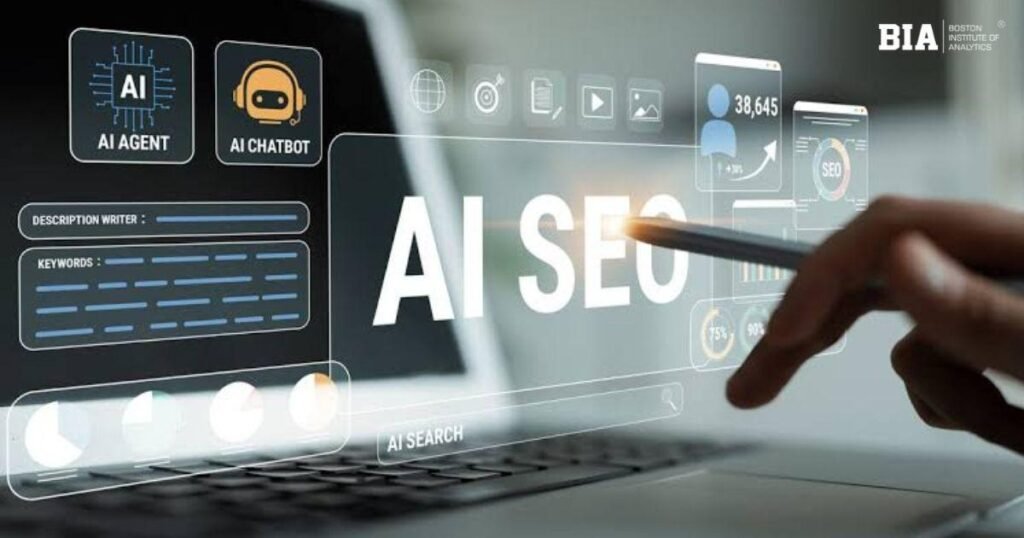
1. AI-Powered SEO Specialist
SEO expert with AI capability will help your organization get found organically in search, AI-based search experience, and generative answer engine. The job of an SEO expert is not just keyword optimization on web pages but rather to know about intent, improve site architecture, create useful content, and gain visibility through search engines and AI search result.
What you do?
- Conduct keyword and topic research based on search intent and business goals.
- Optimize website pages, blog content, metadata, internal links, and technical SEO elements.
- Create content briefs and editorial calendars using AI-supported research.
- Analyse rankings, traffic, conversions, and content performance.
- Prepare websites and content for AI search, AI Overviews, and generative engine optimization (GEO).
AI skills you use
The AI SEO experts utilize generative AI in creating keyword clusters, content brief, competition analysis, content outline, and content repurposing. AI search engines rank based on relevance, authority, clarity, and user experience.
Best for
This path suits beginners who enjoy research, writing, analysis, and problem-solving. It is especially valuable for people who want a career that combines marketing strategy with quantifiable results.
2. Performance Marketing / PPC Specialist
Performance marketers handle paid marketing campaigns which are evaluated based on clicks, leads, sales, cost per acquisition, return on ad spend, and other key performance indicators. This is among the most sought after digital marketing and AI course career paths as companies require marketers capable of allocating the marketing budget in an efficient way.
What you do?
- Plan and launch campaigns on Google Ads, Meta Ads, LinkedIn Ads, and other platforms.
- Build audience segments and test creative variations.
- Monitor budgets, bids, conversions, and campaign performance.
- Improve landing pages and conversion funnels.
- Report on ROI, cost per lead, and customer acquisition cost.
AI skills you use
AI plays a role in audience targeting, automatic bidding, dynamic creative optimization, ad copy testing, and performance prediction. The Meta Advantage+ campaigns are examples where AI powers automation, assisting with the delivery of ads to right audiences as marketers rely on strategic and creative skills along with measurement.
Best for
This career is ideal for data-driven marketers who enjoy research, analytics, and fast decision-making. It is also a strong option for learners who want clear performance metrics tied to professional growth.
3. Social Media Strategist
The social media strategist is responsible for increasing brand visibility, engagement, community creation, and building trust for brands on popular platforms like Instagram, Facebook, LinkedIn, YouTube, and others. The use of AI has accelerated social media marketing processes, yet it’s important to understand that human creativity is still needed.
What you do?
- Develop social media calendars and content themes.
- Create posts, reels, captions, stories, and community-engagement plans.
- Track engagement, reach, follower growth, and conversions.
- Identify trends and audience conversations through social listening.
- Coordinate campaigns with influencers, creators, and paid-social teams.
AI skills you use
AI technologies may help with generating content ideas, writing captions, hashtag research, trending topics, content reuse, image ideas, and social listening. Still, a successful social media strategist needs to evaluate AI-generated material and correct it where necessary.
Best for
Creative communicators who enjoy storytelling, visual content, audience engagement, and fast-moving digital trends will find this path rewarding.

4. Content Marketing Specialist
Content marketing specialists create appreciated content that fascinates, educates, and converts audiences. This includes blog articles, landing pages, email newsletters, video scripts, case studies, product descriptions, and social content.
What you do?
- Research audience needs, search intent, and competitor content.
- Write and edit blogs, website copy, landing pages, and email campaigns.
- Repurpose long-form content into social posts, videos, and email sequences.
- Collaborate with SEO, design, and paid-media teams.
- Measure content performance through traffic, engagement, leads, and conversions.
AI skills you use
Generative AI and prompt engineering can quicken research, ideation, drafting, editing, and repurposing. However, employers expect marketers to use AI as a efficiency partner not as a replacement for original thinking, subject-matter know-how, fact-checking, and brand voice.
Best for
Writers, storytellers, communicators, and authorities with an interest in branding will enjoy this career path. It is also useful for learners who want to build a selection of real marketing assets.
5. Marketing Automation Specialist
Marketing automation specialists design automatic journeys that guide prospects from first communication to purchase and retention. This role connects marketing approach with CRM systems, email platforms, website behaviour, advertising data, and customer segmentation.
What you do?
- Build email workflows, lead-nurturing sequences, and lifecycle campaigns.
- Segment audiences based on behaviour, interests, and purchase history.
- Create personalized website, email, and advertising experiences.
- Connect marketing platforms with CRM and analytics tools.
- Test and improve automated journeys over time.
AI skills you use
AI helps marketers predict customer behaviour, personalize messages, score leads, recommend products, and automate repetitive campaign tasks. Marketing automation also necessitates an understanding of customer journeys, data privacy, consent, and ethical personalization.
Best for
Process-focused marketers who appreciate systems, workflows, customer journeys, and data-driven decision-making are well suited to this role.

6. Digital Marketing Analyst
Digital marketing analysts turn campaign data into practical commendations. They help teams understand what is working, what is underachieving, where customers drop off, and how marketing spend can be improved.
What you do?
- Track KPIs across websites, ads, email, social media, and e-commerce platforms.
- Build dashboards and performance reports.
- Analyse traffic sources, conversion paths, and customer behaviour.
- Conduct A/B tests and interpret results.
- Support budget allocation and campaign optimization decisions.
AI skills you use
AI can assist with anomaly detection, predictive modelling, customer segmentation, sentiment analysis, and automated reporting. However, analysts must still understand attribution, data quality, statistical reasoning, and business context.
Best for
Numbers-oriented learners who enjoy Excel, Google Analytics, dashboards, experimentation, and business strategy will find this path highly valuable.
7. E-commerce / Growth Marketing Specialist
E-commerce and growth marketing specialists focus on acquiring customers, increasing conversions, educating retention, and growing revenue. This role is particularly applicable for online stores, subscription businesses, marketplaces, and direct-to-consumer products.
What you do?
- Improve product pages, checkout flows, and conversion funnels.
- Run acquisition campaigns across search, social, email, and affiliate channels.
- Analyse customer journeys and identify drop-off points.
- Test offers, creatives, landing pages, and product recommendations.
- Improve repeat purchases, customer lifetime value, and retention.
AI skills you use
AI supports product recommendations, dynamic pricing understandings, customer segmentation, churn prediction, personalized messaging, and funnel analysis. Growth marketers use these insights to test ideas quickly and scale what works.
Best for
Business-minded marketers who enjoy investigation, revenue growth, customer behaviour, and conversion optimization will thrive in this career path.

Skills You Gain from AI in Digital Marketing Courses
A strong AI in digital marketing course syllabus had better build both strategic thinking and hands-on execution skills. Learners must be able to plan campaigns, use marketing tools, interpret performance data, and apply AI responsibly.
Key skills include:
- AI content creation and prompt engineering: Creating effective prompts, reviewing AI-generated content, maintaining brand voice, and scaling content production responsibly.
- SEO, AEO, GEO, and AI-search visibility: Optimizing content for traditional search, answer engines, AI Overviews, and generative search experiences.
- Google Ads, Meta Ads, and campaign optimization: Planning, launching, testing, and improving paid campaigns across major advertising platforms.
- Social media strategy and community management: Building content calendars, managing engagement, monitoring trends, and measuring social performance.
- Email marketing and marketing automation: Creating segmented campaigns, automated workflows, lead-nurturing journeys, and retention programs.
- GA4, dashboards, KPIs, and attribution: Measuring traffic, conversions, customer journeys, campaign performance, and return on investment.
- A/B testing and conversion-rate optimization: Testing creatives, landing pages, offers, calls to action, and user experiences.
- Customer segmentation and personalization: Using behavioural and demographic data to deliver more relevant marketing experiences.
- Chabot’s and conversational marketing: Using AI-powered chat experiences to answer questions, qualify leads, and support customers.
- Ethical use of AI, data privacy, and responsible marketing: Understanding consent, transparency, bias, data security, and brand safety.
Boston Institute of Analytics Marketing Analytics and AI materials include predictive modelling, A/B testing, customer-journey analysis, marketing automation, sentiment analysis, e-commerce analytics, attribution modelling, and ethical data practices.
How Boston Institute of Analytics Prepares Learners?
Boston Institute of Analytics prepares learners through practical, industry-aligned education rather than theory alone. The Digital Marketing & Artificial Intelligence program combines marketing fundamentals with AI-enabled workflows, helping learners understand both strategy and execution.
Boston Institute of Analytics approach includes:
- Practical, industry-aligned learning in digital marketing and AI.
- Exposure to AI-powered SEO, campaign automation, predictive modelling, and customer analytics.
- Guaranteed Internship and industry-collaboration opportunities.
- Placement assistance through Boston Institute of Analytics’ placement cell and corporate-partner network.
- Portfolio-building through live projects and practical assignments.
- Career paths across agencies, start-ups, e-commerce, technology, retail, finance, healthcare, and other sectors.
Boston Institute of Analytics conditions that its Digital Marketing and AI programs comprise guaranteed internship opportunities and placement assistance. Its diploma pathway includes guaranteed two-month internship, while its master diploma includes six months of guaranteed on-the-job training.

How AI Skills Fit into a Modern Marketing Workflow?
A modern digital marketing workflow begins with investigation and ends with measurement. AI tools can support every stage, but marketers must still make strategic decisions, evaluate excellence, and connect activity to business consequences.
- Research: Use Gemini or ChatGPT to organize audience insights, keyword ideas, competitor themes, and campaign briefs.
- Planning: Create campaign objectives, messaging angles, content calendars, and channel plans.
- Content creation: Use ChatGPT for copy drafts and Gemini for structured content planning.
- Creative production: Use Canva AI to create social posts, ad creatives, templates, and presentation assets.
- Campaign launch: Use Meta Ads Manager and Meta Advantage+ for paid social campaigns.
- Measurement: Use Google Analytics and platform reporting to review KPIs.
- Optimization: Use performance data to revise copy, creative, audiences, budgets, and targeting.
This workflow shows why education tools together is useful. A marketer who comprehends only content creation may struggle to connect content to adaptations, while a marketer who understands only paid ads may miss opportunities to improve creative, messaging, and customer experience.
Who Should Choose This Path?
Students and Fresher’s
Marketing skills can be made employable and portfolio-worthy even before getting into the job market. A course in digital marketing using AI can assist students and recent graduates to gain marketing skills through planning campaigns, creating content, analysing the results, and executing campaigns using different platforms.
Career Switchers
Career changers can make a transition to marketing jobs related to performance marketing, SEO, analytics, and automation without having to start from scratch. Skills that can be transferred include communication, selling, customer service, project management, and business analysis.
Working Professionals
Marketers, salespersons, communicators, and business professionals can enhance their skills with the help of AI and do well in their current professions. AI will help them develop campaigns, analyse performance, personalize communications, and show value of work done.
Entrepreneurs
AI can be utilized by entrepreneurs to conduct marketing campaigns with minimal resources required for an internal team to do so. AI can be employed in conducting audience research, creating content, conducting advertisements, email marketing, customer support, and performance analysis.
Freelancers
AI can also be used by freelancers in providing SEO services, paid ads, social media management, email marketing, and content creation. A good portfolio, clear service packages, and proven client results may help freelancers in the current competitive environment.

Why Choose Boston Institute of Analytics?
Boston Institute of Analytics Digital Marketing & Artificial Intelligence course combines the core principles of digital marketing with workflows that use artificial intelligence for marketing. The course can be taken both in-class and online, and its duration ranges among four and ten months according to the knowledge path selected.
Practical, Tool-Based Learning
The course contains practical exposure to marketing platforms and AI technologies, counting Google Ads, Google Analytics, SEMrush, Hootsuite, Buffer, Mailchimp, Moz, and native or affiliate systems.
The curriculum also includes:
- Meta Ads Manager
- Meta Advantage+ campaigns
- AI-powered audience targeting
- Dynamic creative optimization
- Facebook and Instagram advertising
This structure helps learners practise both the strategic side of digital marketing and the tool-based execution required to run campaigns.
Placement Assistance
Boston Institute of Analytics provides placement assistance finished its placement cell and corporate-partner network. Support is designed to help learners present their skills, build a specialized profile, and explore opportunities in digital marketing and AI-enabled elevation roles.
Structured Program Paths
| Boston Institute of Analytics program | Duration | Practical career exposure |
|---|---|---|
| Digital Marketing & AI Certification | 4 months | Core digital marketing and AI marketing skills |
| Digital Marketing & AI Diploma | 6 months | Includes Guaranteed two-month digital marketing internship |
| Digital Marketing & AI Master Diploma | 10 months | Includes Guaranteed six months of on-job training as a Digital Marketing & AI Specialist |

Frequently Asked Questions:
What career opportunities are available after AI in digital marketing courses?
After an AI in digital marketing course, learners can pursue roles such as AI-powered SEO specialist, PPC or performance marketing specialist, social media strategist, content marketing specialist, marketing automation specialist, digital marketing analyst, and e-commerce or growth marketing specialist. These roles combine marketing strategy, AI tools, analytics, campaign optimization, and customer-journey management.
Is an AI in digital marketing course worth it in 2026?
Yes, an AI in digital marketing course can be worthwhile for learners who want practical, job-relevant skills in content, paid media, SEO, analytics, automation, and AI-assisted marketing. AI is now a major marketing skill, and employers increasingly seek professionals who can combine AI fluency with creativity, data literacy, and ethical judgment.
What is the eligibility for an AI in digital marketing course?
Most AI in digital marketing courses are open to students, graduates, career switchers, and working professionals. Basic computer literacy, communication skills, and an interest in marketing are usually sufficient; advanced coding is generally not required.
How long does an AI in digital marketing course take?
Boston Institute of Analytics offers learning paths ranging from four to ten months. The certification program takes four months, the diploma includes guaranteed two-month internship over six months, and the master diploma includes six months of on-job training over ten months.
Can I get a job after completing an AI digital marketing course?
A course can improve employability by building practical skills, a portfolio, and familiarity with industry tools. Boston Institute of Analytics supports learners through live projects, guaranteed internship opportunities, resume-building guidance, interview preparation, career counselling, and placement assistance through its corporate-partner network.
Do AI in digital marketing courses require coding?
Most AI in digital marketing courses do not require advanced coding. Learners typically need comfort with digital tools, spreadsheets, analytics platforms, and AI applications; basic logical thinking is helpful, but programming is not usually the main requirement for marketing roles.
Which AI tools should a digital marketer learn?
Digital marketers should learn generative AI tools such as ChatGPT and Gemini, along with Canva AI for creative production. They should also understand Google Ads, Meta Ads Manager, Google Analytics, email-marketing platforms, SEO tools, social-media management tools, and marketing-automation systems.
What is the difference between AI marketing and traditional digital marketing?
Traditional digital marketing focuses on channels such as search, social media, email, and paid advertising. AI marketing adds automation, predictive insights, personalization, generative content, conversational experiences, and data-driven optimization but human strategy, creativity, and ethical oversight remain essential.
How does Boston Institute of Analytics support placements after the course?
Boston Institute of Analytics provides placement assistance through its placement cell and corporate-partner network. Support includes connecting learners with partner companies, resume building, interview preparation, and career counselling to help them pursue digital marketing and AI-enabled marketing opportunities.
Which industries hire AI-powered digital marketing professionals?
AI-powered digital marketing professionals are hired across agencies, start-ups, e-commerce, technology, retail, finance, healthcare, education, travel, real estate, and consumer brands. Any business that needs customer acquisition, engagement, retention, or online revenue growth can benefit from AI-enabled marketing talent.
Final Thoughts
Career-focused AI powered digital marketing training, but not at the cost of taking away the necessity of skilled marketers. Companies need marketers who can understand consumers, create compelling stories, take important decisions, analyse data, and deploy AI.
A course on digital marketing & AI can aid students to develop a robust skill set in various aspects of digital marketing such as SEO, paid media, social media, content marketing, automation, analytics, and growth marketing. For those who are looking for a structured course, along with hands-on projects and placement opportunities, Boston Institute of Analytics provides Digital Marketing & AI courses aimed at bridging the gap between the fundamentals of marketing and AI processes.
If you wish to establish yourself as a professional marketer of today, consider enrolling in Boston Institute of Analytics Digital Marketing & Artificial Intelligence program and pick a learning track that suits your objectives.